
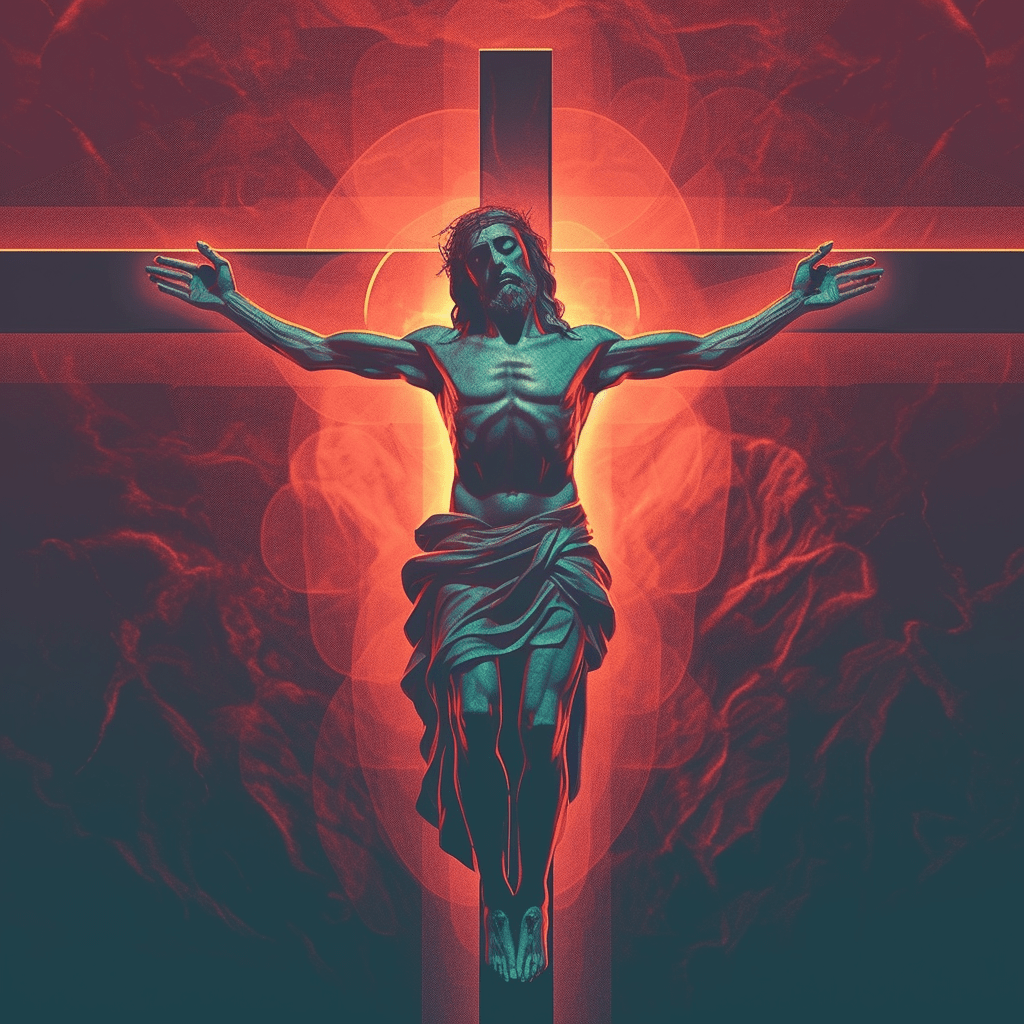
The church’s mission to “make disciples of all nations” (Matt. 28:19) has long been carried out by the works of martyrs and apologists. Just as Jesus embraced persecution and martyrdom, so did his followers—from the first martyr, Stephen (Acts 7:60), to the churches mentioned in the letters of Revelation. Likewise, just as Jesus did a fair amount of apologetics by using Scriptural defense, spiritual logic, reason, and demonstrations of power to defend his actions,1 so did his followers. Paul, for example, won over Jews by preaching Scriptures in the synagogues (Acts 13:13–43) and won over philosophers by looking for segues of truth in their poets and religions (Acts 17:23-28).
These techniques have carried on throughout history in the martyrs and apologists of the early church—from the martyrdom of Polycarp to Martin Luther King Jr.; from the apologetics of Origen to C.S. Lewis. Lewis knew well how to defend the faith, for he himself came into it as “the most dejected and reluctant convert”—a prodigal son “kicking, struggling, resentful, and darting his eyes in every direction for a chance of escape.”2 Lewis shows us via the popularity of his books that when one has been convinced into something they don’t necessarily want to be a part of, their ability to defend and justify their beliefs to others is great. In this article, we’ll address a few of the principles upon which ancient martyrdom and apologetics revolved.
Expectation or Gifting?
It’s hard to deny the Holy Spirit’s work in the writing of a good apologist, like Stephen, in which no debater could argue with “the wisdom and the Spirit with which he spoke” (Acts 6:10). Though the arguments of an apologist may change from culture to culture and age to age, a good apology often carries a discernible spiritual weight that consoles the church and convicts outsiders. For this reason, I would suggest that apologetics is a gifting that fits well under the title of evangelist (Eph. 4:11).
Like many gifts found in the Bible, I’d suggest that Christians are invited to participate in all of them, even if they don’t hold a distinguished calling within that gift. For example, though we may not all have special gifting in giving or compassion (Rom. 12:6–8), all Christians are still expected to give and be compassionate, for the Spirit of such fruit lives within us all (Gal. 5:22–23). Likewise, while we may not all be prophets, we all have the mind of Christ and the Spirit that searches the depths of God’s heart, so the capacity to hear and speak God’s thoughts lies within us (1 Cor. 2:10–16). While we may not all be evangelists in the same powerful way that Paul was, he believed that all Christians could evangelize by living lives that get outsiders’ attention and then respond to their questions with gracious, seasoned answers (Col. 4:2–6).3 Therefore, we can also assume that while some specialize in the area of apologetics, all should remain open to letting the Holy Spirit apologize through them.
It’s interesting to note that the early church had a similar application regarding martyrdom. For them, martyrdom was “something for which one was chosen by God.”5 Yet at the same time, we know the Scriptures consistently and strongly warn us that if we reject Christ, he will also reject us (Matt. 10:32-33). This was likely part of why many in the early church desired to make sure that one did not offer up their life “spontaneously,”6 for they feared that such people would be void of Christ’s help and recant their faith. To the credit of this belief, there does seem to be an almost supernatural quality to the boldness of many ancient martyrs, which is easily seen in stories like that of The Martyrdom of Polycarp and The Martyrdom of Perpetua and Felicitas. Take, for example, Felicitas’ words: “another will be inside me who will suffer for me, just as I shall be suffering for him.”7
If we have no choice but to face persecution and martyrdom, then we must do so whether we feel called or not, for we are never allowed to recant our faith. However, there are times when we can flee from martyrdom just as Paul did (Acts 9:23–25; 13:48–52; 14:1–7). But other times Paul felt the Spirit convict him to walk into persecution and he was faithful to do so (Acts 21). Intriguingly, the Spirit gave Paul this supernatural word through several different groups of Christians and many of them argued that it was a warning to flee persecution, not to go toward it, showing us that even the earliest Christians struggled to discern when it was right to embrace martyrdom rather than flee from it (Acts 21:4). Like Paul, other Christians have had the same debate, such as Ignatius who felt called to martyrdom while his church devised a plan to save him.8
Supernatural Signs
In order to confirm that one has been called into martyrdom, they often looked for supernatural signs. Perpetua and her brother, for example, expected her to experience a vision that might authenticate that she would die.9 She would go on to experience several supernatural signs that did just that. Likewise, Polycarp had a vision of “his pillow being consumed by fire,”10 which foreshadowed that he would be burned alive.
Such signs of martyrdom happened in the Bible as well. May we recall Jesus’s words to Peter that he would suffer (John 21:18–19), John’s prophetic words to the church in Smyrna (Rev. 2:10), and Stephen’s vision of Jesus at the right hand of the Father, which he received moments before being killed.
While the supernatural may not always serve as proof of Christianity for the modern enlightened Western world (a fact I know all too well as an exorcist), it served as an apologetic for people in the ancient world. Indeed, the fact that predicted prophecies had been fulfilled in Christ over the course of hundreds of years was a concrete apologetic that Justin Martyr felt would convince outsiders of the truth.12 Such stories may convince some today, but others will make them out to be nothing more than ghost stories, legends, coincidence, or some kind of misunderstood or unknown science.
Reward and Justice
Though often ignored by the church today, there are several verses in the Bible that portray a variation of rewards to come in Heaven based on how we live now. While such rewards are never clearly spelled out, one concept is found in the beheaded martyrs of Revelation who appear to receive a head start in the resurrection life (Rev. 20:4–6). One might naturally assume from this that since their time was cut short in this life, they will be rewarded with an extension in the next. Of course, Revelation is a notoriously complicated and intentionally vague14 book, so this interpretation is debatable, especially since it is the only place it is mentioned in Scripture.15
The martyrs of the early church certainly seemed to acknowledge a reward for their martyrdom. For example, Perpetua had a vision of her brother Dinocrates who had died from cancer when he was seven. This vision led her to believe that she might be able to aid Dinocrates in the afterlife by going through with her martyrdom.16 While we may lack biblical precedent for this belief, this story and others throughout history glorify the martyrs as saints whose actions carry spiritual weight. Yet despite this reward, Christian apologists fought to end martyrdom altogether, for they rightly believed it was an injustice that a non-Christian should be able to recognize. Therefore, apologists like Justin Martyr wrote his First Apology as “a kind of open letter to the Roman authorities”17 in an attempt to end the horrors that plagued Christians.
Conclusion
It would do the American church a lot of good to push themselves to read the writings of the martyrs and apologists of old. Many American Christians adamantly fight for the right to kill, rather than embrace the same pacifistic conviction the early church had.18 And while the apologists of old were right to fight against the injustices of martyrdom, the American church complains about the smallest oppressions that come their way with a martyrdom complex—as though they are surprised that Jesus’ words that we would suffer actually come true (John 15:18–20). Our unwillingness to suffer leaves us with an untested faith that falls apart when the most minuscule of persecutions come our way.
Likewise, our apologies are weak, often focused primarily upon Scripture, which the secular world does not believe in. Rarely does an apologist come along that truly provokes people in philosophical, theological, historical, rational, supernatural, mystical, and experiential ways.20 Furthermore, the apologetic topics that modern Christians defend are often centered around issues unimportant to the gospel and salvation. Such issues might be if creation happened literally or if the flood was global. While such topics are worth addressing, Augustine invited the church in apologetic style to stop discrediting science back in the 5th century, saying, “If they find a Christian mistaken in a field which they themselves know well and hear him maintaining his foolish opinions about our books, how are they going to believe those books in matters concerning the resurrection of the dead, the hope of eternal life, and the kingdom of heaven, when they think their pages are full of falsehoods on facts which they themselves have learnt from experience and the light of reason?”21
There are two things we can especially learn from these martyrs and apologists: (1) a Spirit-inspired apologetic that brings those with special evangelistic gifting to the forefront of our churches; and (2) a pacifistic way of life that forces us to imagine how we might live when challenged, so we might consider suffering to be “victory”22 and “conquering” (Rev. 3:21). After all, martyrdom sometimes serves as an evangelistic apologetic itself. As Tertullian said, “The oftener we are mown down by you, the more in number we grow; the blood of Christians is seed.”23
Footnotes
1 We could cite many passages to make our point here, but for the sake of brevity, John 10:34–38 nearly captures all of these apologetic techniques.
2 C. S. Lewis, Surprised By Joy, (London and Glasgow: Collins Clear-Type Press, 1955), 182.
3 For more on this idea, see Michael Frost, “Chapter One: Living Questionable Lives,” Surprise the World: The Five Habits of Highly Missional People. (Colorado Springs, CO: NavPress, 2016).
5 Justo L. González, The Story of Christianity. Volume 1: The Early Church to the Reformation, Rev. and Updated ed., 2nd ed. (New York, NY: HarperCollins, 2010), 55, Kindle Edition.
6 Ibid.
7 Bart D. Ehrman, ed. “The Martyrdom of Perpetua and Felicitas,” After the New Testament, 100-300 C.E: A Reader in Early Christianity, 2nd edition (New York, NY: Oxford University Press, 2015), 53.
8 González, The Story of Christianity, 52-53.
9 Ehrman, “The Martyrdom of Perpetua and Felicitas,” After the New Testament, 100-300 C.E, 49.
10 Ehrman, “The Martyrdom of Polycarp,” After the New Testament, 100-300 C.E, 35.
12 Ehrman, “Justin’s Dialogue with Trypho,” After the New Testament, 100-300 C.E, 24-25; 79-80.
14 Michael S. Heiser, The Unseen Realm: Recovering the Supernatural Worldview of the Bible, 1st ed. (Bellingham, WA: Lexham, 2015), 241-243, Logos Bible Software.
15 N. T. Wright, “Revelation 20:1-6,” Revelation for Everyone, New Testament for Everyone Series, (Louisville, KY: Westminster John Knox Press, 2011), Logos Bible Software.
16 Ehrman, “The Martyrdom of Perpetua and Felicitas,” After the New Testament, 100-300 C.E, 50.
17 Ibid, 74.
18 González, The Story of Christianity, 63.
20 Some of these perspectives on apologetics are taken from, C. Stephen Evans, “Apologetics,” Pocket Dictionary of Apologetics & Philosophy of Religion, (Downers Grove, IL: InterVarsity Press, 2002).
21 Aurelius Augustinus. “Book One,” Genesi Ad Litteram, Books 1-6, edited by Johannes Quasten et al., (New York, NJ; Paulist Press, 1982) 42-43.
22 Ehrman,“The Martyrdom of Perpetua and Felicitas,” After the New Testament, 100-300 C.E, 18.
23 Tertullian, “The Apology.” Latin Christianity: Its Founder, Tertullian, edited by Alexander Roberts, James Donaldson and A. Cleveland Coxe, translated by S. Thelwall, 3:55. The Ante-Nicene Fathers, (Buffalo, NY: Christian Literature Company, 1885).
 Jamin Bradley
Leave a comment