

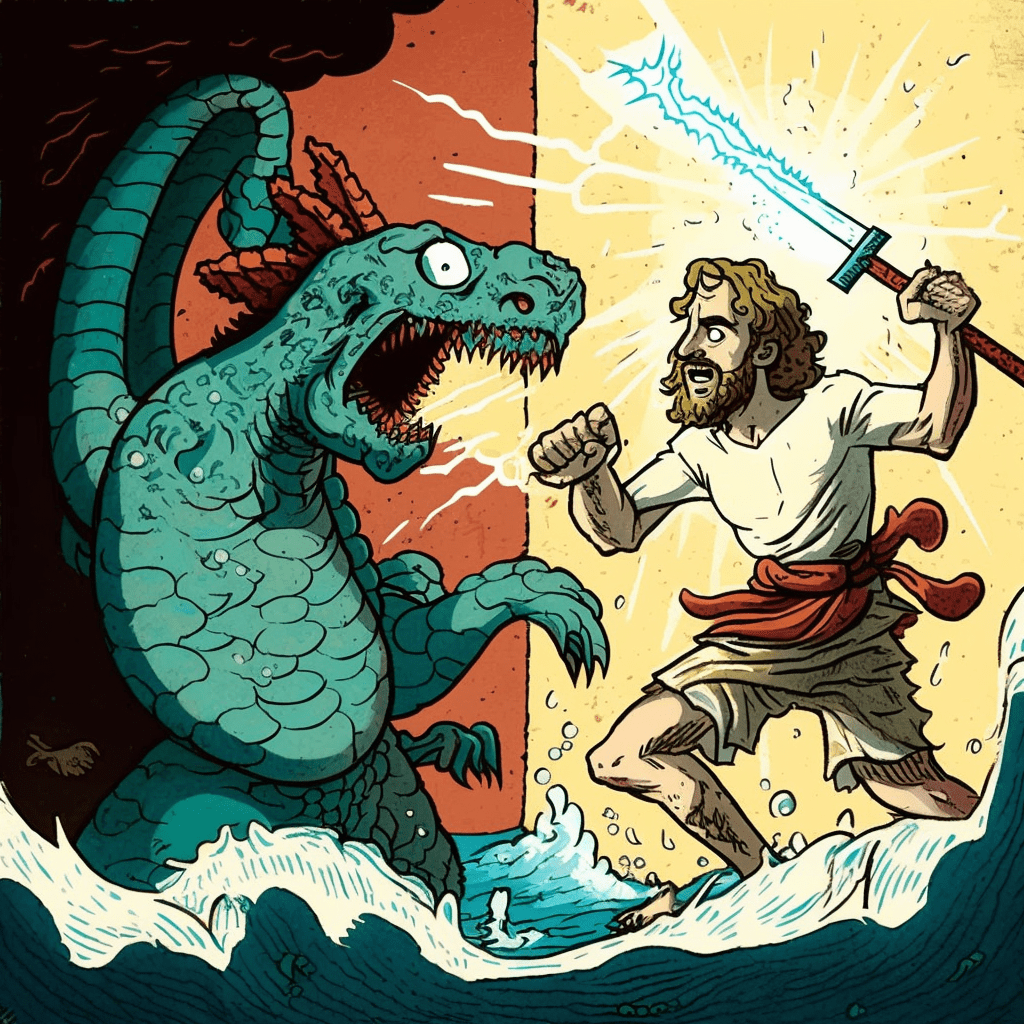
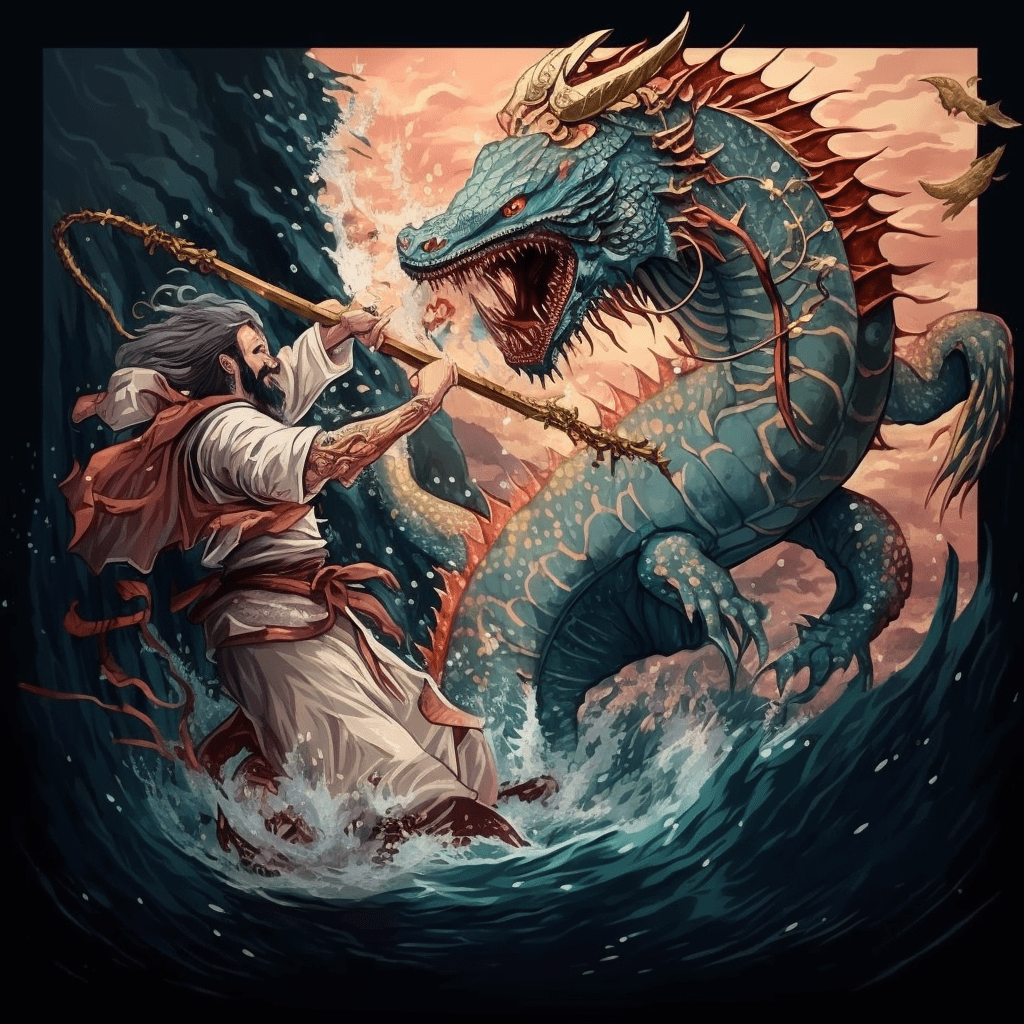
There’s a popular German word in theology known as “Chaoskampf”—meaning, “battle against chaos.” Many ancient creation stories are steeped in chaoskampf, be it Baal fighting Yamm (the sea itself), or Marduk fighting Tiamat (a sea monster). As these gods fight, the world is created and put in order. For example, Marduk uses pieces of Tiamat’s corpse to create the world.
While the creation story in Genesis does not use chaoskampf—for Yahweh is so powerful that he need do nothing more than speak to create—other creation stories in the Bible use chaoskampf. Though Yahweh did not need to fight the other little-g-gods he made in order to create the world, the Bible writers still use chaoskampf to show that Yahweh is supreme over all the other gods and chaos forces that ancient culture feared.
For example, Psalm 89:10-12 talks about how Yahweh defeated the sea monster Rahab and then goes on to immediately acknowledge how he created the world and owns it all. Psalm 74:13-17 speaks of how Yahweh defeated the many heads of the sea monster Leviathan (a sea monster known as Litanu in other ancient literature), and then follows up this statement with God establishing the stars, the sun, the day, the night, the boundaries of the earth, and the seasons. Job 26:7-13 has some similar comparisons as well.
John takes all of these chaoskampf themes and weaves them into the book of Revelation. There he envisions the Old Testament’s many-headed water-chaos-monsters and earth-chaos-monsters rising up alongside the ultimate dragon-chaos-monster, Satan. John wants us to see that one day all themes and beings of chaos will reach their peak reign in society, religion, politics, and cosmology, and then God will defeat them once and for all, fulfilling the prophecy of Isaiah 27:1 where it is proclaimed that one day God will take his sword and slay Leviathan for good.
Why wait until chaos has taken over completely? Because until it’s that bad, Yahweh in his patience knows there’s still a chance that people will repent, leave the chaos gods behind, and come to his love.


 Jamin Bradley
Leave a comment