
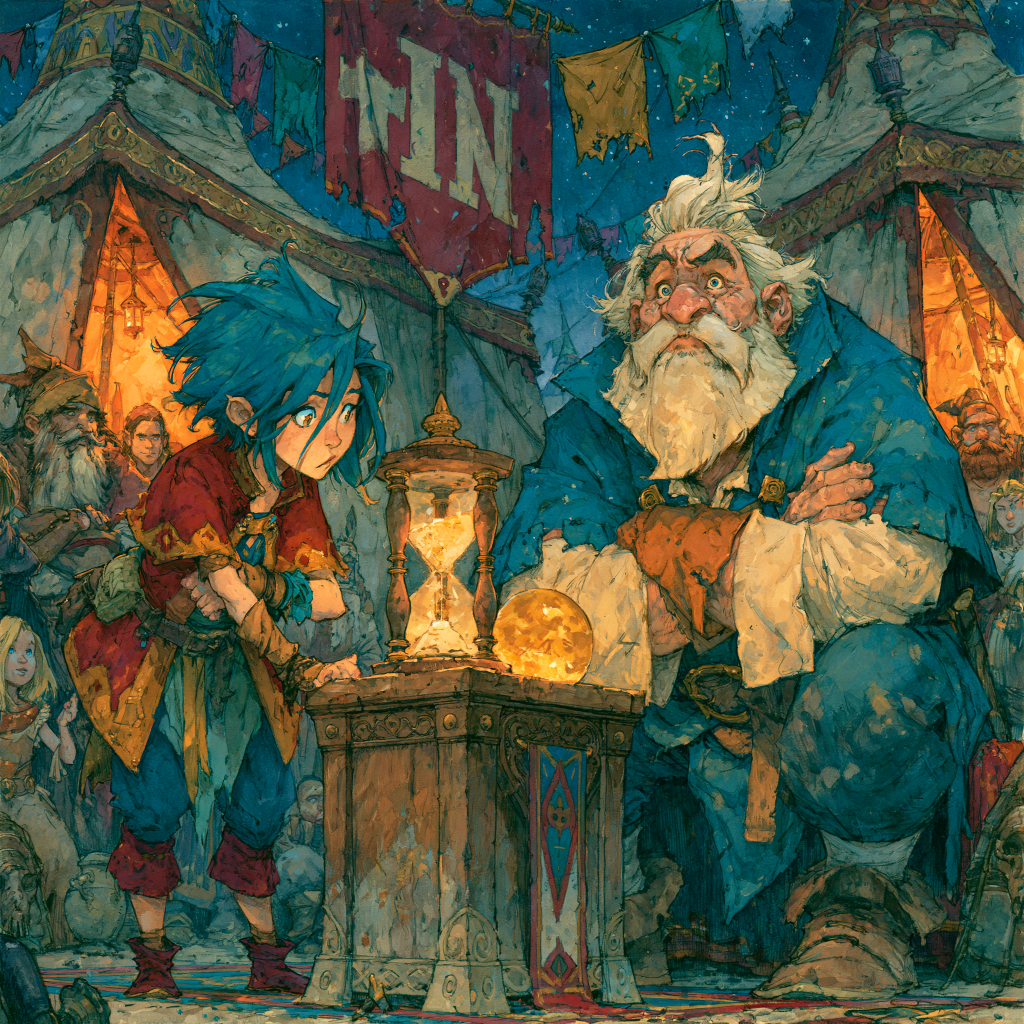
After months of grueling war, the Gavaun leaders welcomed the Oshkin leaders to their tent to entertain conversations of peace. Hearts among the two nations were as hard as could be, and no civilian expected that this would be the moment that would curve things in a better direction.
As the Oshkin leaders approached the entrance, the Gavaun soldiers at the door demanded that they surrender all their belongings. Though insulted by these demands, the Oshkin reluctantly submitted to the rules. They removed their priceless rings and sacred necklaces, emptied their pockets into the hands of the smirking soldiers, and entered the tent. With the Oshkin out of sight, the soldiers chuckled and threw the objects into the trash.
As you can imagine, peace was not found that day.
Months went by, and the tides of war shifted. It was now the Oshkin that welcomed the Gavaun leaders to their tent to discuss the possibilities of peace. As the Gavaun approached the tent door, they were met by Oshkin soldiers demanding that they surrender all of their belongings before entering. The faces of the Gavaun fell. They had heard the stories of what their soldiers had done. At the time, they had even gotten a laugh out of it. But now they knew their retribution had come. They sighed heavily and removed their priceless rings and sacred necklaces, and emptied their pockets into their enemies’ hands.
Hours later, the Gavaun leaders left the tent quickly, their pace fueled by their anger. As they reached the gate, they heard one of the soldiers call out for them. “Sirs! Your belongings?”
The Gavauns stopped in their tracks. Surely this was a trick. Would they not be mocked when they turned around? They whispered to each other for a moment, and then one of them turned around and walked up to the soldier. He quickly grabbed their things from the soldier’s hand, and then they swiftly made their exit.
Peace was not found that day either.
Months went by, and the tides of war shifted once again. As the Oshkin approached the gate, they were surprised to find the Gavaun leaders outside the tent, one of them standing in front of a table holding what appeared to be a wrapped gift.
“You were humane with us when we were inhumane with you,” said the leader. “We cannot recover your priceless rings and your sacred necklaces, nor the items you kept in your pockets. While we do not know if peace will be found today, we would like to offer you this gift to make reparations for our behavior.”
The Gavaun pulled the bow as the box walls fell over to reveal an ornate sand timer.
“The sand timer is one of the greatest symbols among the Gavaun people, and this one was carved by our most acclaimed craftsman. Our most sacred lessons and stories are tied to this symbol, and it carries many meanings. In this case, it represents our desire to turn back time to better honor your first visit. But just as time moves forward no matter how you turn the timer, so can we only do our best to do better with the time ahead of us.”
As you can imagine, hearts began to soften. But peace was not found that day.
As the months went by, the tides of war shifted, and the Gavaun came to discuss peace at the Oshkin tent. The Oshkin leaders were found outside their tent, one of them standing behind a table holding a cylindrical box. The leader confessed that the Gavaun’s previous gift should have softened their hearts more than it did and that peace should have been found sooner. They now wished to reciprocate by giving a gift of their own. As the Oshkin began to slowly pull the tall cylindrical top off the gift, the brightest, golden glow you could ever imagine blinded the eyes of all who looked upon it. The solid orb that was revealed must have been made of the most refined gold in the world.
Peace was found that day.
Peace Day became a holiday, and a new tradition was established. Every year, the Gavauns and the Oshkins would gather for a new kind of war: a “gift-off,” I suppose you might call it. Each nation would present a gift to the other to see whose might be better. It became an intriguing display of craftsmanship and culture, as each nation would explain the significance of what they had offered the other.
This tradition continued for about a century, until one particular exchange between an Oshkin man and a Gavaun woman brought it to a sudden end. The man and the woman unveiled their nation’s gift at the same time, revealing the exact same gift: a large crystal glass with a small amount of gleaming white wine at the bottom. Both the glass and the liquid shone in the sun as all who gathered for the exchange looked at it with mouths agape. Neither nation had to explain the gift, for both realized in that moment that they had the same story. No greater gift could have possibly been given, and for that reason, the tradition no longer needed to continue.
“Do you hear that?” the woman said to the man.
The man looked around, listening closely, but heard nothing. He shook his head.
“It’s as though the beat of every sacred song ever written is contained in that cup.”


 Jamin Bradley
Leave a comment