
The election is almost here. I’ve already voted my conscience, as I know you will, too. In a democracy, it’s all about candidates seeking power, and we hope that those newly elected officials will put their effort into using that power for good. And as my phone buzzes for the 500th time with another political spam text, I find myself reflecting on the wonders of Jesus, who spent his whole life battling the temptation for power.
When Satan met him in the wilderness, he tempted him to use miraculous power to get everything he ever wanted. He was hungry, so why not turn stones to bread? He needed a following, so why not jump off of a building in a crowded space and let angels float him down to the ground in front of everyone? Jesus came to save the world, which was under Satan’s thumb, so why not partner with Satan and he’d give it to Jesus in return? All of these actions would naturally get Jesus power, but he refused each.
When it came to the religious sphere, the Pharisees and Sadducees carried a great amount of power. If there was anyone you wanted on your side as an itinerant minister, it’d be them. If he could earn their trust, then he’d find himself carrying all the power of the religious machine. They approached Jesus one day and echoed Satan’s temptation: “Show us a sign from Heaven.” There are so many things Jesus could have done in that moment to win them over and gain their endorsement, yet he did none of them—for he knew there was a different way to power.
He tried to explain this way to his disciples one day. Yes, he would one day save the world—but he would not do it with great power, but with the complete absence of it. He would make himself lower than ever and let those with power take his life. This lowly, humble way was the true way to power.
His friend Peter wouldn’t stand for the idea and spoke out against it. In that moment, Jesus heard the echoes of Satan’s temptation, which ran against the grain of God’s will, which Jesus was trying so hard to unite himself to. Peter’s invitation to get power Satan’s way would always be easier than getting it God’s way. It was already enough of a battle in his mind before his best friend began to encourage him to do the wrong thing.
The weight of the temptation beared down on him in the Garden of Gethsemane—his own version of the Garden of Eden. Adam and Eve once listened to Satan when he offered them power to become like the gods. Instead of follow God’s will, they fell for the trap and empowered Satan’s reign over the Earth. Would Jesus do the same?
The severe stress and anguish seemed to manifest in Jesus’s body as hematidrosis—a painful condition where sweat ducts rupture and bleed. Jesus didn’t look to Satan for another option, but he did ask God if there might be one. But knowing that there wasn’t, he pressed on toward the cross. Though he was God-in-flesh, the most powerful human in the whole world, with the ability to summon angels to wipe out his enemies, he emptied himself of all power.
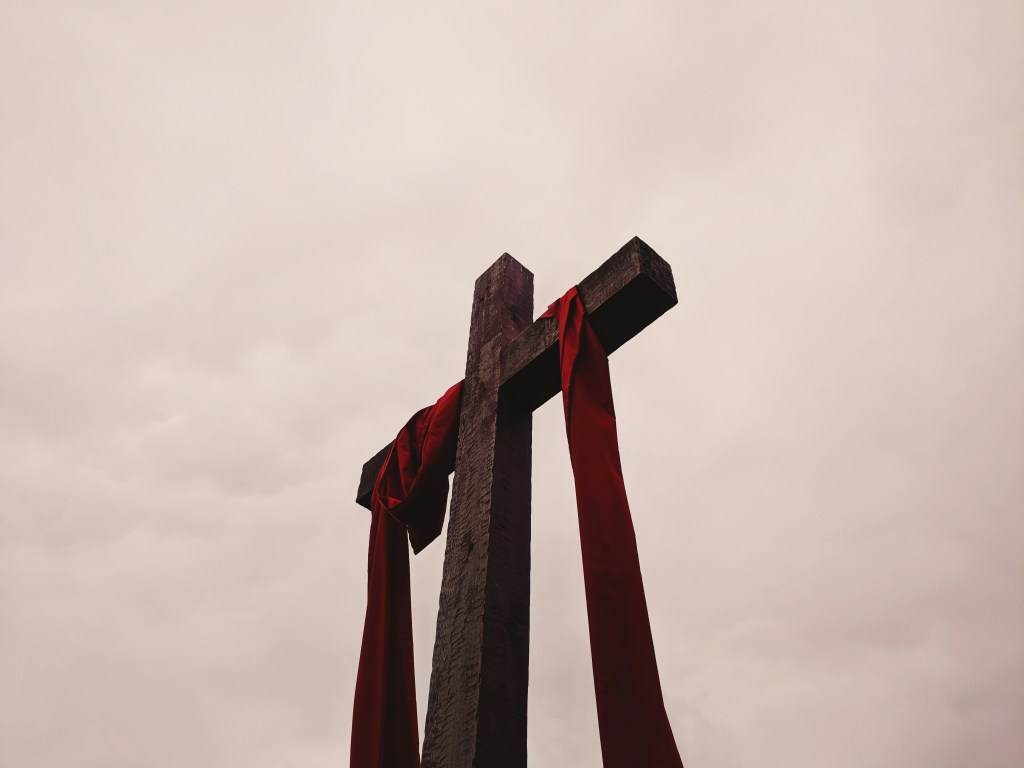
As he hung on the cross, the temptation came once more through the voice of the crowd: “If you are the Son of God, come down from the cross.” In that statement Jesus heard the voices of Satan, of the religious leaders, of his best friend, and of his own inner turmoil.
But instead of choosing the power to hold people to their debt, Jesus chose to forgive. And then he died.
Three days later, he came back to life with all power—a twist that no one saw coming or could comprehend, even though Jesus had already clearly communicated it.
Doing things the God way is altogether different. Do we dare to imagine?


Leave a Reply